

The Medical Training Survey (MTS) is a national survey of doctors in training, led by the Medical Board of Australia and The Australian Health Practitioner Regulation Agency (AHPRA). It was developed in partnership with stakeholders and is designed to produce valuable data for analysis and to support the quality improvement of medical training in Australia.
The MTS is conducted annually, from August to early October, coinciding with the medical registration renewal cycle. It has been running for 5 years, since 2019. Each year, doctors in training - including medical interns, prevocational and unaccredited trainees, specialist non-GP and GP trainees, and international medical graduates - are invited to participate in the MTS.
In 2023, 22,337 doctors in training participated in the confidential MTS survey and the survey results can be accessed on the MedicalTrainingSurvey.gov.au website as a MTS National report or via their interactive data dashboard. MTS participants are AHPRA-registered doctors in training from all over Australia.
Below we have listed key results from the 2023 MTS survey - including charts, tables and comparisons to previous years. In general, the results of the 2023 MTS found:
- Doctors in training respondents had slightly lighter workloads and were working fewer hours in 2023 compared to previous years.
- Post-pandemic, there are growing numbers of doctors in training who completed their initial medical degree outside Australia.
- The quality of medical training in Australia remains high, with respondents providing positive feedback on supervision, orientation, education, and training.
While the MTS results help to paint a picture of doctors in training in Australia, it should be noted that the survey has a national response rate of around 54.5%, so it does not represent all doctors in training in Australia. The survey results are subject to limitations and more information on MTS methodology can be found here.
Demographics of Doctors in Training in Australia - MTS respondents:
For the last five years, the average age of MTS respondents (doctors in training) has remained steady, averaging between 33 -36 years, trending slightly younger since 2019.
Table 1. Average age of Doctors in Training – MTS respondents

Table 1: generated by MedicalJobsAustralia.com using data from the Medical Training Survey 2023, pg.18, and the MTS create your own report (Qu.56 ‘What is your Age?’- Profile/demographics section).
The percentage working full-time hours has remained steady, but declined somewhat over the past 5 years, with a slight increase in part-time and casual employment arrangements.
Table 2. Work type of Doctors in Training – MTS respondents
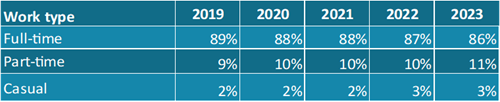
Table 2: generated by MedicalJobsAustralia.com using data from the Medical Training Survey 2023, pg.18, and the MTS create your own report (Qu.2 ‘Are you Employed…? ’- Profile/demographics section).
While most respondents completed their primary medical degree in Australia, the percentage has been trending downwards since 2021 and appears to be returning to pre-pandemic levels, with growing numbers of doctors in training who completed their primary medical degree outside of Australia.
Table 3. Primary Medical Degree of Doctors in Training – MTS respondents
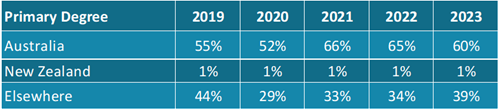
Table 3: generated by MedicalJobsAustralia.com using data from the Medical Training Survey 2023, pg.18, and the MTS create your own report (Qu.58a Did you complete your primary medical degree in Australia or New Zealand? - Profile/demographics section).
Chart 1: MTS Doctors in Training - Primary Medical Degree 2023
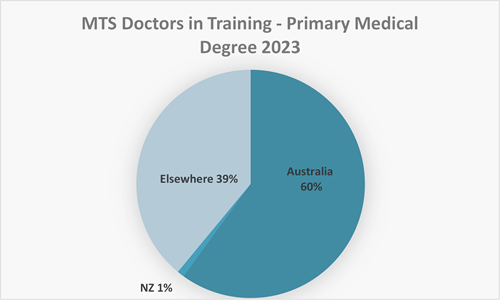
Chart 1: generated by MedicalJobsAustralia.com using data from the Medical Training Survey 2023, pg.18
International Medical Graduates (IMGs) – Training Pathways
In the MTS, IMG respondents are asked which training pathway they are in. Chart 2 below shows the distribution and percentage of IMG respondents by training pathway. Table 4, further below, compares current percentage rates to the last five years. In 2023, compared to the 5-year average, there was a slightly lower percentage of IMGs undertaking the Specialist Pathway and the AMC Exam Standard Pathway, while there was a slightly higher percentage undertaking the Short-Term Training Pathway and the Workplace Based Assessment Standard Pathway.
Chart 2: International Medical Graduates (IMGs) MTS respondents by Training Pathway in 2023
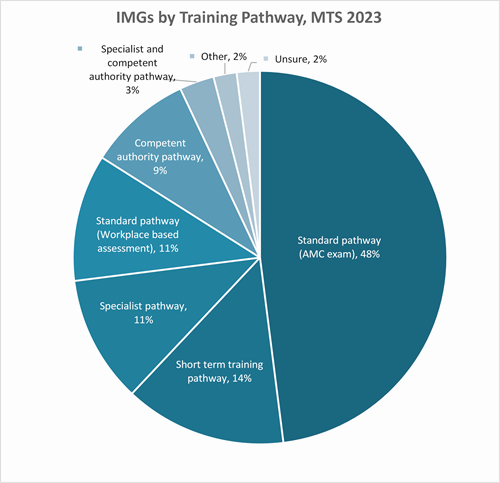
Chart 2: generated by MedicalJobsAustralia.com using data from the Medical Training Survey 2023, pg.29, qu. 11a – Which Pathway are you in? (IMG respondents).
Table 4: IMG Pathways 2019-2023
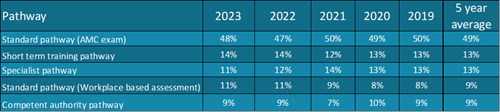
Table 4: generated by MedicalJobsAustralia.com using data from the Medical Training Survey 2023, pg.29, and the MTS create your own report (Q11a. Which pathway are you in? – IMG respondents, Training Curriculum section
Training perceptions, overall satisfaction, and future intentions of Doctors in Training
Overall satisfaction of training positions, training settings, and the quality of clinical supervision remained high in 2023. The percentage of respondents who would recommend their current training position was similar to previous years, but rates were higher in 2023 compared to 2022 and 2019.
Table 5: Perceptions of Training quality 2019-2023
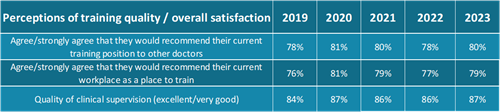
Table 5: generated by MedicalJobsAustralia.com using data from the Medical Training Survey 2023, pg. 34-50, and the MTS create your own report (Section: Clinical Supervision qu. 31, and Overall Satisfaction qu.50)
The percentage of respondents who reported a heavy/very heavy workload has reduced, as has the average number of hours worked per week.
Table 6: Workload and hours worked 2019-2023

Table 6: generated by MedicalJobsAustralia.com using data from the Medical Training Survey 2023, pg. 46-47, and the MTS create your own report (Section: Workplace Environment and Culture qu. 45 and 46).
Future career intentions show a reduced interest in medical research and medical teaching in 2023, trending downwards since 2019, however medical teaching remains a popular area of interest for most respondents. Also trending downwards since 2019 is the number of respondents with concerns about secure employment prospects – demonstrating that doctors in training are more confident about future career opportunities.
Table 7: Future Career Intentions 2019 – 2023
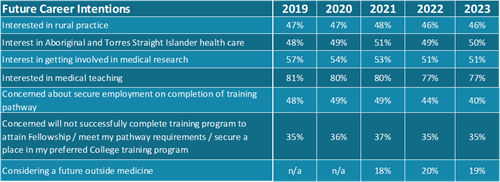
Table 7: generated by MedicalJobsAustralia.com using data from the Medical Training Survey 2023, pg. 46-47, and the MTS create your own report (Section: Workplace Environment and Culture qu. 45 and 46).
Assessment and Exams
When asked about their College exam(s), Specialist GP trainees felt more supported by their College than Specialist non-GP trainees, with under half of respondents agreeing they received timely and useful feedback.
Table 8: Perceptions on College Exams and Feedback, MTS 2023
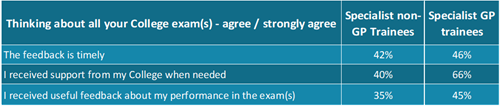
Table 8: generated by MedicalJobsAustralia.com using data from the Medical Training Survey 2023, pg. 32-33
For assessments in setting, 69% of doctors in training, across all cohorts, had received an assessment for their performance. However, only 53% of prevocational and unaccredited trainees had received an assessment, compared to 84% of IMGs. This seems to suggest that prevocational and unaccredited trainees are less likely to receive an assessment compared to IMGs (Medical Training Survey 2023, pg.8, 30).


